
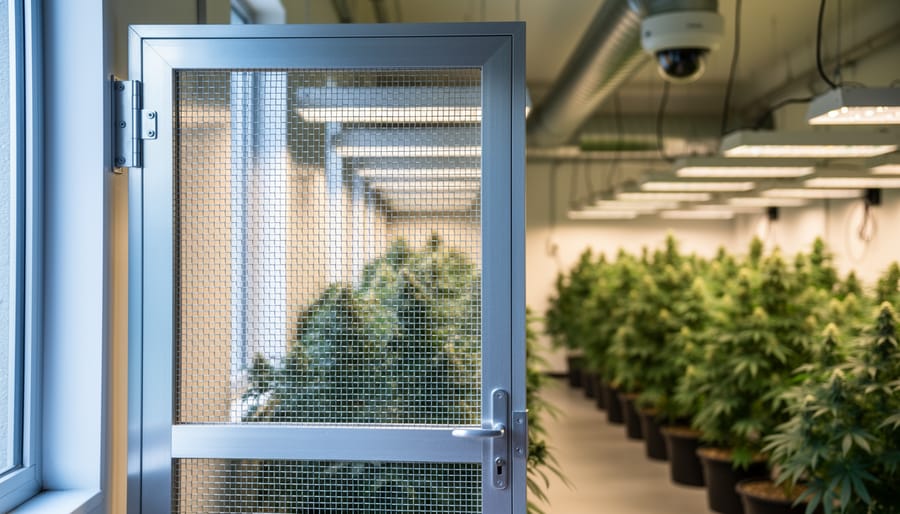
Secure your cannabis facility’s regulatory compliance and operational integrity by installing Crimsafe security screen doors and windows—a specialized physical barrier system engineered with 0.9mm tensile stainless steel mesh that withstands forced entry attempts while maintaining required visibility for surveillance systems. This mesh technology, secured through a patented Screw-Clamp system into aluminum frames, creates tamper-resistant perimeters that satisfy state-mandated security protocols without compromising emergency egress requirements or natural ventilation needs critical for cultivation environments.
Cannabis facilities face security challenges distinct from conventional commercial properties. Regulatory agencies require demonstrable physical security measures, including intrusion-resistant barriers at all entry points and vulnerable openings. Simultaneously, operators must maintain environmental controls, preserve sight lines for monitoring equipment, and ensure rapid evacuation routes remain unobstructed. Traditional security solutions—solid steel doors, window bars, or bulletproof glass—often fail to address these competing demands, forcing facility managers into compliance trade-offs that increase operational costs or create safety vulnerabilities.
Crimsafe technology addresses these industry-specific requirements through engineering validated by independent testing against knife attacks, crowbar leverage, and sustained impact forces. The mesh configuration permits airflow and light transmission while preventing unauthorized access or product theft. For cultivation rooms, processing areas, and dispensaries, this translates to regulatory-compliant security that preserves the environmental conditions necessary for product quality and the transparent operations required for audit readiness.
Understanding how to specify, install, and integrate Crimsafe systems within your facility’s comprehensive security architecture determines whether your investment delivers measurable risk reduction or becomes another underperforming security expense.
The Security Vulnerabilities Cannabis Facilities Can’t Afford to Ignore
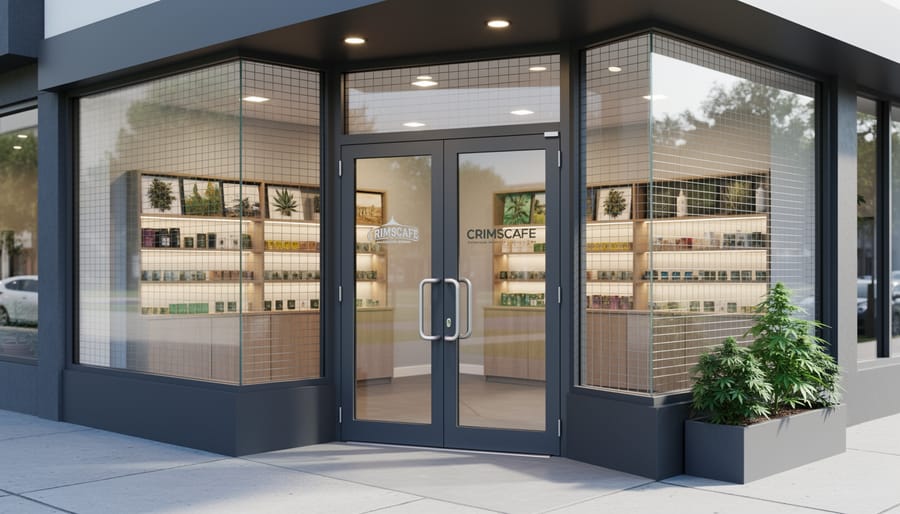
Regulatory Security Standards Across State Markets
Cannabis facility security requirements vary significantly across state markets, creating a complex regulatory landscape that demands careful attention to physical security infrastructure. Most states with legalized cannabis programs have established specific mandates for doors, windows, and entry points, recognizing these as critical vulnerabilities in facility protection.
States like California, Colorado, and Massachusetts require multi-layered security approaches that include reinforced entry systems capable of deterring unauthorized access. Many jurisdictions specifically mandate impact-resistant barriers at all points of entry, with requirements often specifying resistance to forced entry attempts for defined time periods. Window and door specifications typically must meet commercial-grade standards, with some states requiring systems that can withstand specific levels of physical force.
Michigan and Illinois regulations emphasize perimeter security, mandating that all exterior openings in cultivation, processing, and dispensary facilities incorporate hardened materials. Several states require video surveillance integration at all access points, necessitating security solutions that accommodate camera systems without compromising structural integrity.
Washington and Oregon regulations focus on preventing “smash and grab” incidents, requiring glazing and frame systems that maintain barrier integrity even under sustained attack. These standards often reference specific testing protocols and certification requirements that conventional security products may not satisfy.
The challenge for cannabis operators lies in implementing solutions that meet these diverse requirements while maintaining operational functionality and professional aesthetics. Understanding your specific state’s physical security mandates is essential when selecting door and window systems, as non-compliance can result in license suspension, substantial fines, or operational shutdowns. Working with security products that have documented performance certifications simplifies the compliance demonstration process during inspections and license renewals.
The True Cost of Inadequate Physical Security
Security breaches in cannabis facilities carry consequences far beyond immediate property loss. Industry data reveals that a single break-in can result in product losses ranging from $50,000 to over $500,000, depending on facility size and inventory levels. These incidents trigger a cascade of financial impacts that many operators underestimate during initial planning phases.
Insurance premiums for cannabis facilities already exceed those of traditional retail operations by 300-400%, and inadequate physical security can drive these costs even higher. Following a security breach, operators commonly face premium increases of 25-50% at renewal, with some carriers refusing coverage altogether. This creates long-term financial strain that compounds initial theft losses.
Regulatory consequences present equally significant risks. State licensing authorities mandate strict security protocols, and violations can result in fines ranging from $10,000 to $50,000 per incident. Repeated security failures may lead to license suspension or revocation, effectively shutting down operations. Several jurisdictions have implemented mandatory facility closures following theft incidents, resulting in revenue losses exceeding hundreds of thousands of dollars during remediation periods.
Beyond direct financial impacts, security breaches create operational disruptions including mandatory inventory reconciliation, regulatory investigations, and reputational damage that affects customer confidence and business relationships within the tightly regulated cannabis supply chain.
What Makes Crimsafe Different From Standard Security Barriers
The Engineering Behind Crimsafe’s Protection Level
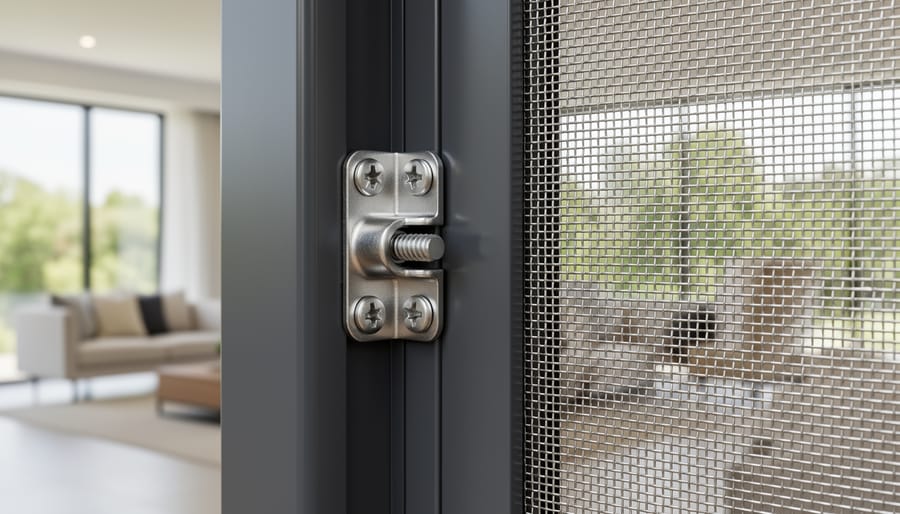
Crimsafe’s exceptional security performance stems from its proprietary Screw-Clamp™ technology and 0.9mm 304 structural grade stainless steel mesh, engineered specifically to resist forced entry attempts. Unlike traditional security screens that rely on rivets or basic attachment methods, the Screw-Clamp™ system tension-locks the mesh into the frame using tamper-resistant screws at approximately 25mm intervals, creating an integrated barrier that distributes force across the entire structure rather than at individual weak points.
The stainless steel mesh features a unique weave pattern designed to resist cutting tools commonly used in break-in attempts. Independent testing demonstrates that Crimsafe can withstand repeated knife-shear attacks, with the mesh deflecting blade strikes rather than separating. This knife-shear resistance proves particularly valuable for cannabis facilities where determined intruders may attempt multiple breach methods.
Impact testing reveals equally impressive results. Crimsafe screens have successfully withstood impacts exceeding those specified in Australian Standard AS5039 and AS5041, which evaluate dynamic impact resistance using various projectile weights and velocities. In practical terms, this means the screens can absorb significant force from sledgehammers, crowbars, and similar implements without compromising structural integrity.
The powder-coated aluminum frame adds another layer of security while maintaining corrosion resistance in various environmental conditions. Frame corners utilize continuous welding rather than mechanical joints, eliminating vulnerable connection points that could be exploited during forced entry attempts.
For cannabis facility operators evaluating security investments, these engineering specifications translate to measurable protection. The combination of high-tensile mesh, advanced clamping technology, and rigorous testing standards creates a defensible perimeter that meets insurance requirements while providing the documented performance data necessary for regulatory compliance documentation.
Maintaining Visibility and Aesthetics While Maximizing Security
Cannabis facilities face a unique challenge: implementing robust security without creating an unwelcoming fortress appearance that discourages customers or impedes essential operational workflows. Crimsafe security screens address this balance through their distinctive design, which integrates stainless steel mesh technology that provides exceptional protection while maintaining transparency.
For retail dispensaries, first impressions significantly impact customer experience and brand perception. Unlike traditional bars or solid security shutters that create an institutional atmosphere, Crimsafe’s mesh design allows natural light penetration and clear visibility into the space. This transparency helps dispensaries maintain the inviting, professional aesthetic that customers expect while still deterring smash-and-grab attempts and forced entry.
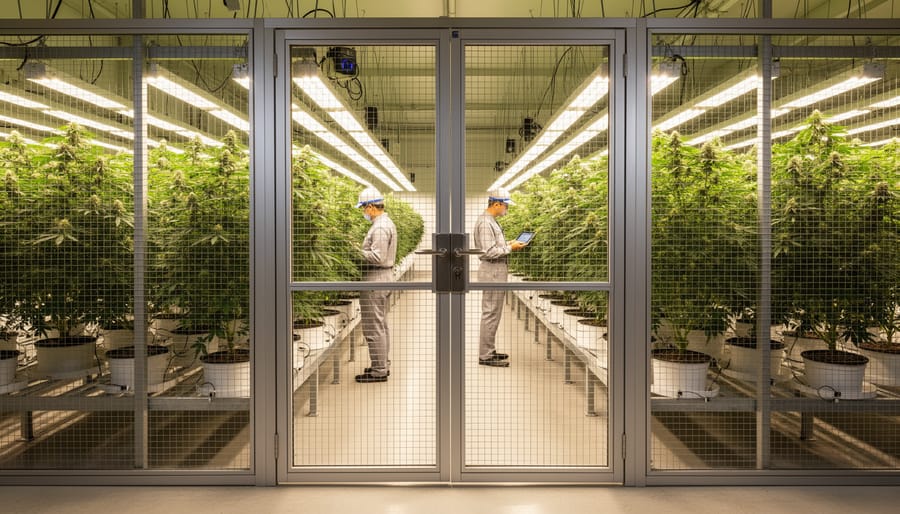
In cultivation and processing areas, operational visibility remains critical for management oversight and quality control monitoring. Crimsafe installations allow supervisors to observe work areas without compromising security protocols. The screens enable clear sightlines through facility spaces while maintaining the physical barriers required by regulatory compliance standards.
The powder-coated finishes available for Crimsafe products can be customized to complement existing architectural elements and branding, ensuring security integration enhances rather than detracts from facility design. This approach demonstrates that comprehensive protection doesn’t require sacrificing the professional appearance essential for cannabis businesses operating in an increasingly competitive and regulated marketplace.
Strategic Applications of Crimsafe Across Different Cannabis Facility Types
Retail Dispensaries: Balancing Customer Experience with Security
Retail cannabis dispensaries face a unique challenge: implementing robust security measures while maintaining an inviting atmosphere that encourages customer visits. Crimsafe security doors and windows address this balance effectively by providing high-level protection that doesn’t compromise aesthetic appeal.
Unlike traditional security bars or metal shutters that create an unwelcoming fortress appearance, Crimsafe’s woven mesh screens maintain transparency and allow natural light to flow through retail spaces. The stainless steel mesh is discreet enough that customers perceive a modern, professional environment rather than a high-security facility. This psychological factor proves essential for dispensaries competing in markets where customer experience directly influences brand loyalty and revenue.
The system’s tensile strength—capable of withstanding significant impact force—protects against smash-and-grab attempts while maintaining clear sightlines for staff to monitor the sales floor and exterior areas. This visibility supports both security protocols and customer service standards, as staff can engage with approaching customers before they enter.
For dispensaries operating in high-traffic urban environments or areas with previous security incidents, Crimsafe installations provide measurable risk reduction. The technology meets insurance requirements and regulatory compliance standards without alienating the customer base that dispensaries work diligently to build in an increasingly competitive marketplace.
Cultivation and Processing Facilities: Protecting High-Value Inventory
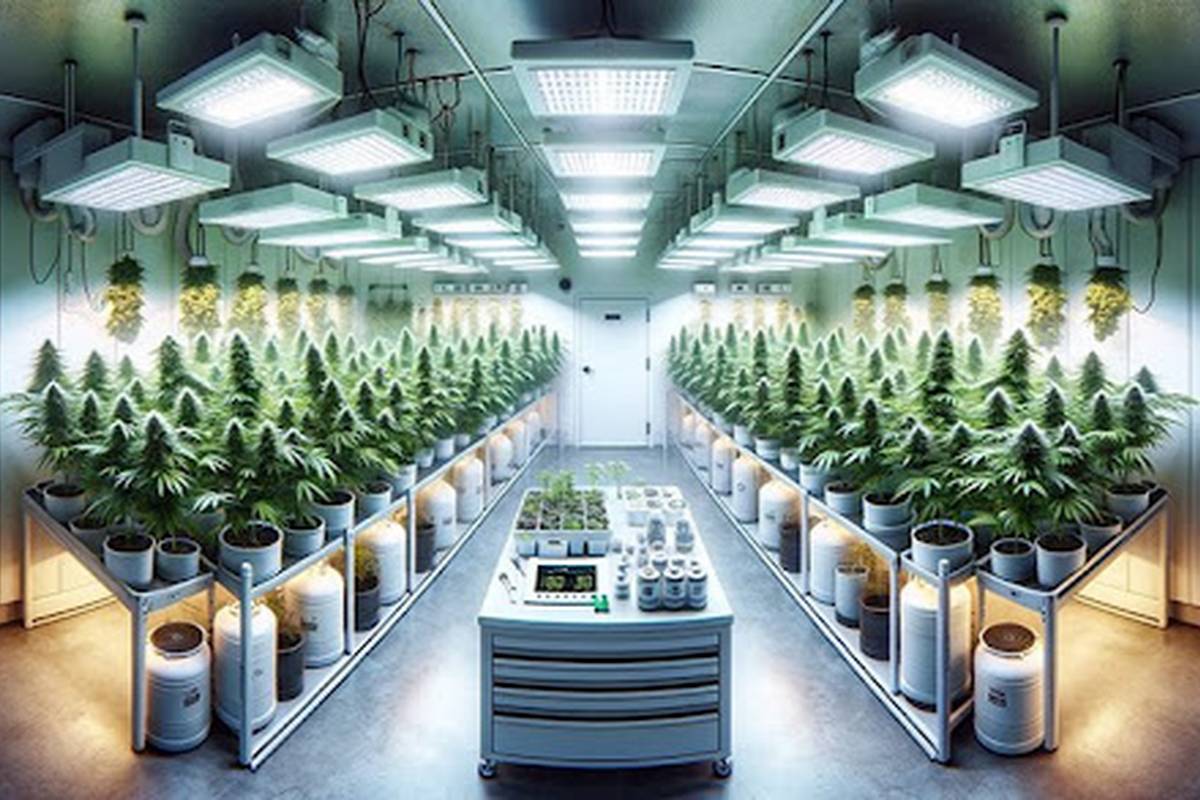
Cultivation and processing areas represent the highest concentration of valuable inventory in cannabis operations, making them prime targets for theft and security breaches. Grow rooms typically house hundreds or thousands of plants worth millions in potential revenue, while drying and curing areas contain finished product awaiting packaging. These spaces require security solutions that protect inventory without compromising the environmental controls essential for plant health and product quality.
Crimsafe security screens provide an ideal solution for these sensitive areas by combining maximum security with necessary ventilation. The stainless steel mesh construction allows proper airflow crucial for temperature and humidity management while preventing unauthorized access through windows and doors. Unlike solid barriers that trap heat and moisture, Crimsafe maintains the delicate environmental balance required throughout cultivation and processing stages.
Perimeter security extends beyond exterior walls to include internal access points between different production zones. Installing Crimsafe on doors between propagation, vegetative growth, flowering, and processing rooms creates secure compartmentalization that limits exposure during daily operations. This layered approach reduces vulnerability while maintaining your cannabis facility workflow efficiency, as staff can still monitor conditions visually through the mesh without compromising security protocols required by regulatory authorities.
Vault and Storage Areas: Maximum Security Zones
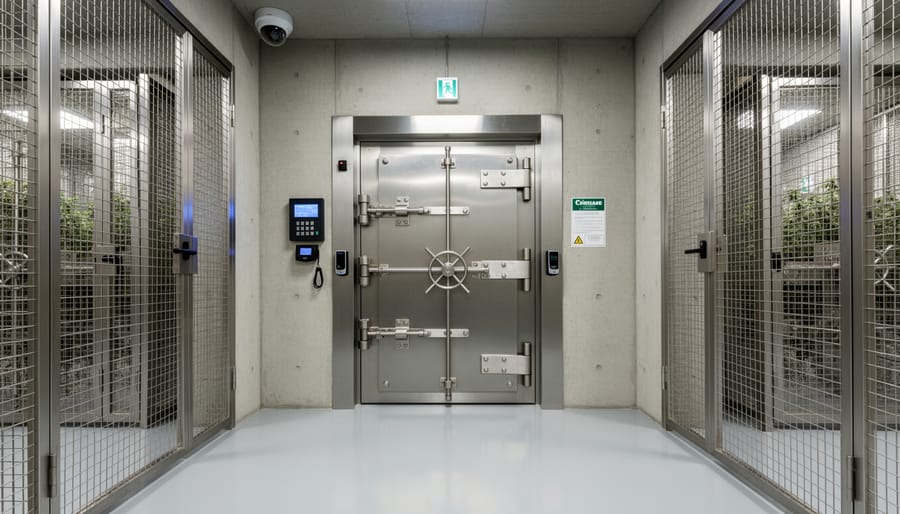
Vault and storage areas housing finished cannabis products, cash reserves, and sensitive documentation represent the most critical security zones in your facility. These spaces typically require Level 3 or Level 4 security measures under state regulations, making Crimsafe an essential component of your protection strategy.
For vault applications, Crimsafe security screens function as a secondary barrier behind standard doors, creating a layered defense system that significantly extends forced-entry resistance time. The 0.9mm stainless steel mesh withstands cutting tools, crowbars, and impact attempts far longer than conventional barriers, providing valuable minutes for security response during breach attempts.
Storage room windows benefit from Crimsafe’s tamper-resistant installation system, where patented Screw-Clamp technology anchors the mesh directly into structural framing. This eliminates the vulnerable points that traditional security bars present, where bolt cutters can compromise entire sections within seconds.
Consider implementing Crimsafe screens on interior vault room walls adjacent to exterior building perimeters. This addresses a commonly overlooked vulnerability where determined intruders bypass doors entirely by breaching through adjoining walls. The transparent mesh maintains visual surveillance capabilities while providing robust physical protection, allowing security personnel to monitor stored inventory without compromising the barrier’s integrity.
Regular security audits should verify that Crimsafe installations maintain their structural integrity and that no modifications have weakened the protective envelope around these maximum-security zones.
Integration with Comprehensive Security Systems
Coordinating Physical and Electronic Security During Design
Successful physical security implementation requires thoughtful coordination between Crimsafe installations and electronic surveillance systems from the earliest design stages. Position door and window sensors at contact points where Crimsafe mesh meets frames, ensuring detection of any attempted breach. This integration creates redundant security layers that regulatory bodies typically require for cannabis facilities.
Camera placement should complement Crimsafe barriers by monitoring all entry points from multiple angles. Install cameras to capture facial recognition quality footage at doors while maintaining broader coverage of windows. Work with your security integrator to determine optimal mounting locations that don’t interfere with Crimsafe hardware operation or maintenance access.
During the design phase, plan conduit runs and power supplies for sensors before Crimsafe installation begins. This prevents costly retrofitting and ensures clean, professional installations. Coordinate with your general contractor to schedule rough-in work that accommodates both physical barriers and electronic components seamlessly.
Consider access control integration at Crimsafe door installations, allowing authorized personnel to enter while maintaining security protocols. Motion sensors positioned inside perimeter windows provide additional intrusion detection behind the Crimsafe barrier. Your monitoring system should link all components to a central station, providing real-time alerts when sensors detect unusual activity at any protected opening. This comprehensive approach satisfies compliance requirements while maximizing your security investment’s effectiveness.
Real-World Performance: Case Studies from Cannabis Operations
Cannabis facility operators consistently face the dual challenge of maintaining fortress-level security while ensuring efficient daily operations. Several documented Crimsafe installations demonstrate how this technology addresses these competing demands.
A licensed cultivation facility in Northern California provides a compelling example. This 15,000-square-foot operation previously relied on traditional security bars over standard windows, which created ventilation issues and failed a state compliance inspection due to inadequate emergency egress points. The facility installed Crimsafe doors and windows throughout their flowering rooms and administrative areas. Within the first six months, the operation experienced zero attempted break-ins despite being located in an area with documented theft activity. More significantly, their next quarterly compliance audit resulted in perfect marks for security infrastructure, and the improved airflow reduced HVAC costs by approximately 18 percent.
A Massachusetts dispensary faced different challenges. Located in a converted retail space with street-facing windows, they needed to balance security requirements with creating an inviting customer environment. Their previous solution involved rolling security shutters that took staff members 20 minutes to open and close daily. After installing Crimsafe window screens with clear mesh, the dispensary eliminated this daily routine entirely. During their first year of operation, the facility processed over 12,000 customer transactions without security incidents. The transparency of Crimsafe also allowed natural light to enhance product displays, contributing to what management reported as improved customer experience scores.
An Oregon processing facility documented the most dramatic impact. Prior to Crimsafe installation, they experienced three attempted break-ins over 18 months, resulting in product loss exceeding $45,000 and temporary operational shutdowns for investigation and repairs. After retrofitting their facility with Crimsafe security doors at all access points and windows throughout their extraction lab, the facility has operated for over two years without successful breach attempts. One documented incident involved attempted forced entry that failed to penetrate the Crimsafe barrier, with video surveillance capturing the deterrent effect.
These case studies consistently demonstrate that Crimsafe installations deliver measurable returns through reduced theft, streamlined compliance, and operational improvements that extend well beyond basic security considerations.
Design-Build Considerations for Crimsafe Implementation
New Construction vs. Retrofit: Planning Your Security Infrastructure
The decision between integrating Crimsafe during new construction versus retrofitting existing facilities significantly impacts both budget allocation and operational continuity. When building your cannabis facility from the ground up, incorporating Crimsafe security screens allows for seamless integration with architectural design, typically reducing installation costs by 15-25% compared to retrofitting. New construction enables precise frame specifications, eliminates modification expenses, and ensures security measures align with regulatory compliance from day one without operational disruptions.
Retrofitting existing cannabis facilities presents different considerations. While installation costs run higher due to structural modifications and potential downtime during security upgrades, the investment still proves worthwhile for facilities facing increased regulatory requirements or security incidents. Retrofit projects typically require 3-5 days per facility section, necessitating careful scheduling to minimize cultivation cycle disruptions. However, the phased approach allows operators to prioritize high-risk areas like product storage and cash handling zones first. Both scenarios benefit from working with experienced design-build teams who understand cannabis-specific security requirements and can coordinate installations around operational demands while ensuring full regulatory compliance.
For cannabis facility operators navigating the complex intersection of security requirements, regulatory compliance, and professional presentation, Crimsafe security doors and windows represent a proven solution that addresses all three concerns simultaneously. Unlike conventional security measures that often create institutional environments or fail to meet stringent state regulations, Crimsafe systems deliver robust protection while maintaining the professional aesthetics essential for legitimate cannabis operations. The technology’s track record in high-security applications, combined with its ability to preserve natural light and visibility, makes it particularly well-suited to the unique demands of cultivation facilities, processing centers, and dispensaries.
However, the effectiveness of any security solution depends significantly on proper implementation. Cannabis facilities face industry-specific challenges that require specialized knowledge, from understanding local regulatory frameworks to designing layouts that balance security protocols with operational efficiency. Working with experienced design-build teams who understand both comprehensive security requirements and the nuances of cannabis facility operations ensures that Crimsafe installations are optimized for your specific application. These professionals can assess your facility’s vulnerabilities, recommend appropriate configurations, integrate Crimsafe systems with existing security infrastructure, and ensure installations meet all applicable compliance standards.
The investment in proper security infrastructure protects not only your valuable inventory and equipment but also your business license, reputation, and long-term viability in this highly regulated industry. By partnering with specialists who bring cannabis-specific experience to the implementation process, facility operators can confidently deploy Crimsafe solutions that provide lasting security, regulatory compliance, and professional presentation.



+ There are no comments
Add yours